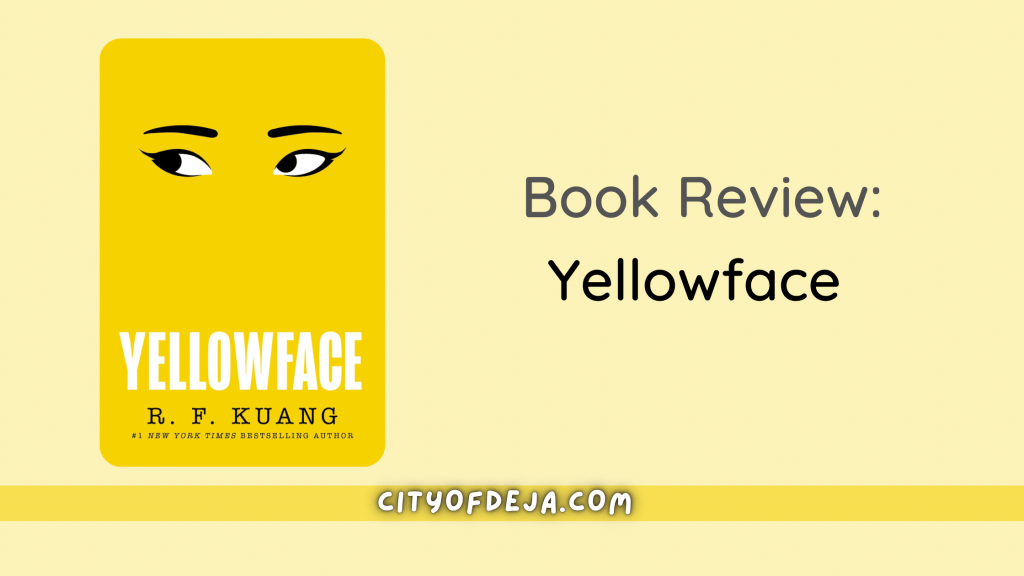
My first read by R.F. Kuang was one part an enjoyable enigma and another part hollow social commentary. I inhaled the book in two days, but was left a bit puzzled by the end.
Note: There are slight spoilers ahead for Yellowface. Nothing major, as the synopsis really spells out what happens in the book, but proceed with caution or come back once you’ve finished the book :).
About The Book
Authors June Hayward and Athena Liu were supposed to be twin rising stars: same year at Yale, same debut year in publishing. But Athena’s a cross-genre literary darling, and June didn’t even get a paperback release. Nobody wants stories about basic white girls, June thinks.
So when June witnesses Athena’s death in a freak accident, she acts on impulse: she steals Athena’s just-finished masterpiece, an experimental novel about the unsung contributions of Chinese laborers to the British and French war efforts during World War I.
So what if June edits Athena’s novel and sends it to her agent as her own work? So what if she lets her new publisher rebrand her as Juniper Song–complete with an ambiguously ethnic author photo? Doesn’t this piece of history deserve to be told, whoever the teller? That’s what June claims, and the New York Times bestseller list seems to agree.
But June can’t get away from Athena’s shadow, and emerging evidence threatens to bring June’s (stolen) success down around her. As June races to protect her secret, she discovers exactly how far she will go to keep what she thinks she deserves.
With its totally immersive first-person voice, Yellowface takes on questions of diversity, racism, and cultural appropriation not only in the publishing industry but the persistent erasure of Asian-American voices and history by Western white society. R. F. Kuang’s novel is timely, razor-sharp, and eminently readable. (via Goodreads)
Review
I felt pretty compelled to read Yellowface since it seemed as if the target audience was the online bookish sphere, a community I am all too familiar with as a blogger. The premise is quite specific, and I was interested to see how Kuang would portray the topic of authorship amidst the backdrop of present day publishing.
This book has all the gimmicks and references to the Book Internet that you can possibly think of: from Twitter discourse to BookTube to Goodreads. And for about 80% of the book, I was onboard with how much of a page turner this was. Our main character, June, spirals in and out of her own head after she steals Athena’s completed works and finally gets her flowers from the publishing world. I was hooked. And I thoroughly enjoyed the tongue-in-cheek insider view of the dynamics of publishing and how intertwined book reviewing spaces are with the industry in the contemporary moment.
And then the ending happened. The last 80 or so pages became a cartoonish villain takedown that felt extremely contrived and thematically unsuitable. The story’s most interesting new development (the pseudo-autobiography that June eventually becomes inspired to write) gets completely unraveled by this bizarre reveal. Nothing is really left up to interpretation despite the psychological overtones that were set up in the latter half of the story. Instead, we get blunt lines from our unreliable protagonist about how being diverse is the golden key to publishing success (the satire being driven home). And then we hear from another character on how publishing is also the perpetrator of shoehorning authors into diverse categories and keeping them there (which I’m assuming is not satirical, but alas it’s difficult to differentiate the two). And then the novel ends. It seems as if Kuang was really onto something here….until she wasn’t. At some point the book started to feel less like a clever cultural response and more like the sanctimonious behavior it attempts to condemn; it tries to say so much that it falls victim to its own trap and it ends up not saying much at all. So where does that leave us?
In some ways, I’m not entirely surprised by the conclusion as I read reviews (both glowing and lower rated) to give me a sense of what to expect as this is my first novel by Kuang. And hey, maybe the overt dramatics are just her style, which is perfectly fine—I just don’t jive with it. I do believe that this book was set out to be a hot topic and spark discussion which I can always appreciate from a novel (it was fodder for this review after all). But the substance of the story—that feeling it’s supposed to leave you with—is wholly absent.
Overall, I think this was still a fascinating read, even with my gripes, and I do think lots of book bloggers and reviewers will enjoy its more meta elements. As for the big question: does it work? I don’t think so. Maybe partially, or in a certain light. Yellowface is gutsy and readable, yes, but it flails during its final attempt to tie together all those big ideas that it promises to comment on. There’s a lot of of bark in this book, but ultimately no real bite in the end.
I will say that I am now even more interested in reading other works by Kuang, as I am curious to see how she will grow as a writer (I may need to finally pick up Babel, her other buzzy release). Yellowface might not have hit all the marks for me, but it made me eager to follow what she does next.
My Ratings
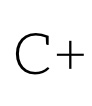
Grade Scale
Star Scale



 City of Deja
Leave a reply to Deja Cancel reply